
Sloty Casino KYC Checks and Verification Limits
 Available in GB
Exact current Sloty KYC document requirements, verification times and account limits were not verified from current official terms, so this page does not invent a document list or promise a processing window. For UK readers, that is the most important answer: do not send proof of identity, address, payment ownership or source-of-funds documents unless the operator identity, secure upload route and legal basis are clear.
This KYC guide separates general Great Britain safer-gambling rules from Sloty-specific uncertainty. The current Sloty account status page explains why login and registration guidance is not provided, while this page focuses on document handling and verification risk.
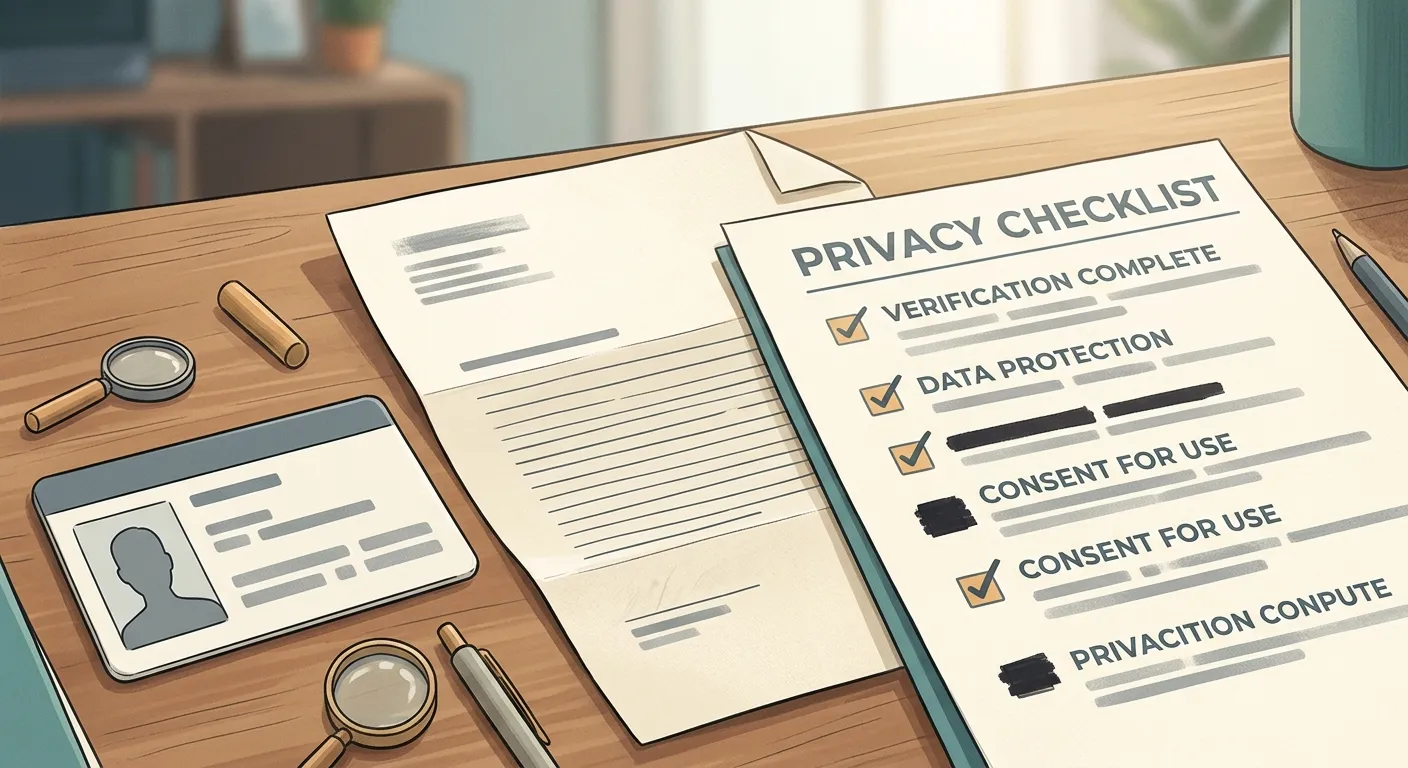
What is not verified for Sloty KYC
The verified facts used for this guide do not support a current Sloty-specific list of accepted KYC documents. They also do not support current verification times, withdrawal-triggered document rules, upload formats, account-limit rules or source-of-funds thresholds. Those are high-risk details. They affect personal data and access to funds, and they need current official terms to be stated safely.
That is why this page avoids statements such as “Sloty verifies accounts in 24 hours” or “Sloty accepts passport and utility bill”. A statement like that needs current official terms or a secure account-specific message. Historical reviews and generic casino knowledge are not enough.
Great Britain KYC and safer-gambling context
The Gambling Commission introduced financial vulnerability checks at £500 net deposits per rolling 30 days from 30 August 2024, lowering to £150 from 28 February 2025. Separate frictionless financial risk assessments remain in pilot. These rules describe licensed Great Britain operators generally; they do not prove that Sloty has a current UK-facing regulated account flow.
The statutory gambling levy commenced in April 2025 and funds research, prevention and treatment of gambling-related harms. This is useful UK context because it shows the direction of regulation: customer protection, affordability signals and safer-gambling intervention are central topics for licensed operators.
Checks to make before sending documents
A legacy Sloty account query can involve sensitive documents, old balances and uncertain operator status. Before sharing anything, build a simple evidence trail and confirm the route is official.
- Confirm the exact domain, HTTPS status and page purpose before uploading files.
- Check the operator name and licence claim against the UKGC casino-checking guide.
- Ask for the reason for the KYC request in writing.
- Use a secure upload portal only, not public complaint threads or social media messages.
- Redact unrelated data when a document contains more information than the request needs.
- Keep dated screenshots of the request, the upload page and any confirmation message.
Document categories and safe evidence standard
| Category | Why it matters | Safe Sloty-specific claim? |
|---|---|---|
| Proof of identity | Usually confirms name and date of birth in regulated gambling checks. | No current Sloty document list is claimed. |
| Proof of address | Usually supports residency and account integrity checks. | No current Sloty address-document rule is claimed. |
| Payment ownership | Can connect deposit and withdrawal methods to the account holder. | No current Sloty payment-upload process is claimed. |
| Source of funds | Can be requested where safer-gambling or anti-money-laundering checks require more evidence. | No current Sloty threshold, format or processing time is claimed. |
How KYC connects to withdrawals
KYC often becomes visible when a player asks to withdraw. For Sloty, the exact current cashout rules are not stated here because official current terms were not verified. The separate Sloty Casino Withdrawals and KYC page explains how to treat historical payment-method references without turning them into current payout promises.
The practical distinction is important: a payment option named in an old review does not show that verification has passed, that the withdrawal route is open, or that the account holder will receive funds by a specific date.
Mistakes to avoid with legacy Sloty verification
Do not upload documents simply to test whether an old account still works. Do not treat a generic KYC checklist from another casino as Sloty’s current requirement. Do not assume that a support email found in an old article is still controlled by the same operator.
If you have an old Sloty issue, start with the main Sloty Casino UK review and then use Is Sloty Casino Safe for UK Players? to understand the broader risk context. Only after that should you decide whether an official support route deserves sensitive information.
KYC verdict
The safe answer is that exact current Sloty KYC requirements and verification limits are not verified here. This page therefore gives no document checklist, no processing-time promise and no current source-of-funds threshold for Sloty.
UK readers should treat identity documents as high-value personal data. Verify the operator, licence position, account route and secure upload method before sharing anything, and keep Sloty-specific claims separate from general Great Britain safer-gambling rules.
Safe document handling when a casino record is legacy
Legacy casino accounts create a specific document risk. A player may still have old emails, a remembered username or a pending withdrawal story, but that does not automatically identify the safe place to upload identity files. Passport scans, bank statements, address documents and source-of-funds material are high-value personal data. They should not be sent to a route that is not clearly tied to the correct operator, current privacy notice and secure account process.
For Sloty research, the safer method is to collect evidence before sending anything new. Keep dated copies of old account emails, transaction references, payment-provider records and any support replies. Check whether the message asks for information that is proportionate to the stated issue. Be especially careful with requests that arrive from unfamiliar domains, ask for unnecessary card images, or pressure you to use a non-standard channel. A legitimate verification process should explain why documents are needed, how they are handled and what happens next.
KYC red flags in a legacy-account situation
Be cautious if a document request is vague about the legal entity, arrives from a domain that does not clearly match the casino record, asks for full card images without masking guidance, or refuses to explain why the document is needed. Also be cautious if support pushes the player to send files through ordinary email when a secure account route is not clearly available.
Those warning signs do not prove fraud by themselves, but they raise the standard of evidence a reader should demand. With Sloty, the safest approach is to verify the operator route first and send no new sensitive files until that route is clear.
When in doubt, pause the document exchange and collect evidence first. Personal data is harder to recover than an abandoned account check.
That caution protects readers.
Extra KYC review steps before sending documents
A cautious KYC process begins before any file is uploaded. The reader should confirm three things: that the request belongs to the same account journey, that the route is secure, and that the requested document type is proportionate to the action being taken. A routine address check is different from a source-of-funds review. A withdrawal query is also different from a generic account reactivation message. Treating every document request as identical makes it easier to miss risk signals.
For a legacy Sloty account, the safest sequence is to verify the account-access route first, then read the wording of the document request, then decide what can be safely masked. Many identity checks do not require showing every digit of a bank card or every unrelated transaction on a statement. Where masking is allowed, it should hide data that is not needed while leaving the name, date, issuer and relevant transaction context readable.
Readers should also keep their own audit trail. Save the support message, note the date and time, keep a copy of the exact upload page or email route and record which files were sent. If a dispute later appears, that evidence is more useful than a memory of what the support agent said. It also helps the reader avoid sending the same sensitive document repeatedly through different channels.
Do not let urgency override privacy. A message that pressures the player to send documents immediately, refuses to identify the legal basis for the request or asks for documents through an unrelated address should be treated as a red flag. The practical answer is not to argue in the moment, but to pause, confirm the route and send only the minimum document set needed for the stated purpose.
The core decision is simple: KYC can be legitimate, but the channel and scope still matter. A careful UK reader should not upload sensitive identity files until the request is connected to a clear account process, a secure route and a specific reason.
Find the best options for sloty casino .
Read our detailed review of Sloty Casino Bonus History and UK Eligibility
Sloty Casino Payment Methods: Historical Deposit and Cashout Options
Content created by the «slotycasinoguideuk.com» team